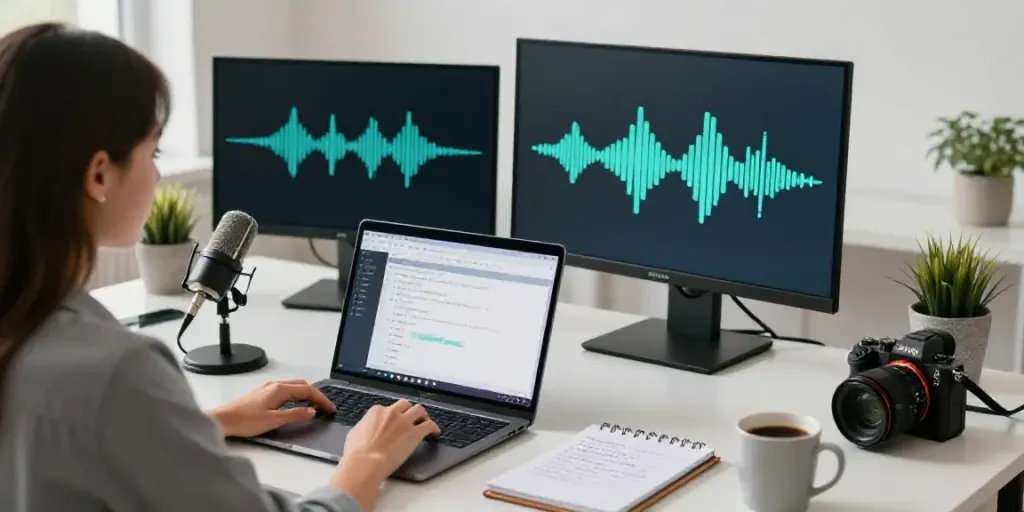
Understanding Online AI Audio Transcription
In today's fast-paced digital world, the demand for quick and efficient audio transcription methods has surged. Online AI audio transcription has emerged as a revolutionary tool, leveraging artificial intelligence to convert spoken language into written text with remarkable speed and accuracy. This advancement not only streamlines workflows but also enhances accessibility across various industries, from education to media, offering a cost-effective solution for businesses and individuals alike.
What is Online AI Audio Transcription?
Online AI audio transcription refers to the automated process of converting audio files, such as interviews, podcasts, or lectures, into text using advanced algorithms and machine learning models. Unlike traditional transcription services that rely on human transcribers, AI transcription tools harness the power of voice recognition technology to deliver accurate and timely transcripts.
The Technology Behind AI Transcription Tools
The core technology driving AI transcription involves complex neural networks that are trained on vast datasets of spoken language. These networks utilize deep learning techniques to understand various aspects of human speech, including syntax, semantics, and phonetics. As a result, AI transcription tools can handle multiple languages, dialects, and speaking styles, making them versatile and widely applicable.
Benefits of Using AI for Audio Transcription
- Speed: AI transcription significantly reduces the time required to convert audio to text. While human transcribers may take hours to complete a task, AI can often deliver results in real-time or within minutes.
- Cost-Effectiveness: Utilizing AI tools can lower transcription costs dramatically, as they eliminate the need for manual labor.
- Scalability: AI transcription services can easily handle multiple projects simultaneously, making it ideal for businesses with high transcription demands.
- Consistency: Unlike human providers, AI doesn’t suffer from fatigue, ensuring that the quality of transcription remains consistent across tasks.
Comparative Analysis: AI vs. Manual Transcription
Speed and Efficiency in Transcription
One of the most significant advantages of AI transcription is its speed. AI tools can process spoken content in real-time, making them a preferred choice for live events and meetings. In contrast, manual transcription can take several times longer, particularly for lengthy recordings that require careful attention and frequent pauses for note-taking.
Accuracy Levels in AI Transcription Tools
While AI transcription tools have improved significantly in accuracy, particularly with advances in natural language processing, they can still struggle with heavy accents, overlapping speech, or specialized terminology. However, many tools provide features that allow users to review and edit transcripts, enhancing overall accuracy. In many cases, the accuracy of AI transcription can rival that of human transcription, especially in ideal recording conditions.
Cost Implications for Businesses
The cost of transcription can be a crucial factor for businesses, especially those requiring regular or large-scale transcription services. AI transcription tools typically operate on a subscription or pay-per-use model, which can be significantly cheaper than hiring dedicated transcription staff. Additionally, the reduced turnaround time can lead to increased productivity and less downtime in operations.
Common Challenges with Online AI Audio Transcription
Handling Accents and Dialects
One of the inherent challenges of AI transcription lies in accurately processing diverse accents and dialects. While leading AI tools continue to enhance their capabilities, regional variations can still present difficulties, leading to potential misinterpretations in the transcript.
Noise Interference and Sound Quality
Background noise can severely impact the quality of AI transcriptions. Unlike human listeners who can distinguish speech from ambient sounds, AI may misinterpret noisy recordings. Ensuring high-quality audio input is critical for achieving optimal transcription results.
Privacy and Confidentiality Issues
Data security remains a crucial concern for many businesses utilizing AI transcription services. Sensitive information captured in audio recordings must be handled carefully, as improper data management can lead to breaches of confidentiality. Businesses should look for transcription services that prioritize data protection and compliance with regulations such as GDPR.
Best Practices for Effective Use of AI Transcription Tools
Tips for Preparing Audio for Transcription
To maximize the effectiveness of AI transcription, users should prepare audio recordings carefully. Consider the following:
- Ensure speaker clarity by minimizing background noise.
- Use high-quality microphones to enhance sound quality.
- Encourage speakers to articulate their words clearly and avoid talking over each other.
Choosing the Right AI Transcription Platform
With many AI transcription tools available, selecting the right platform is essential. Factors to consider include:
- Supported audio formats and languages
- Accuracy ratings and user reviews
- Integration capabilities with existing workflows
- Cost structure and subscription models
Reviewing and Editing AI-Generated Transcripts
AI-generated transcripts often require human review for improved accuracy. Users should allocate time for editing, particularly for complex or industry-specific terminology. Implementing a standardized review process can ensure that final transcripts meet quality expectations.
The Future of Online AI Audio Transcription
Emerging Trends in AI Technology
As AI technology continues to evolve, we can expect several trends to shape the future of audio transcription:
- Increased accuracy through advanced machine learning models and larger datasets.
- Integration with other AI applications, such as sentiment analysis and data analytics.
- Enhancements in real-time transcription capabilities for live events and meetings.
Predictions for the AI Transcription Industry in 2026
By 2026, the AI transcription industry is expected to experience substantial growth, driven by increasing demand across sectors such as legal, healthcare, and education. The focus will likely shift toward creating more customizable and adaptive transcription tools that cater to specific industry needs.
How Businesses Can Adapt to Future Changes
To stay competitive, businesses should actively monitor developments in AI transcription technology. Investing in training and adopting cutting-edge tools will enable companies to harness the full potential of AI, thereby improving operational efficiency and customer service.
What is the accuracy of online AI audio transcription?
The accuracy of online AI audio transcription tools is generally high, often exceeding 90% under optimal conditions. However, this can vary based on audio quality, accents, and the complexity of the speech patterns involved.
How to choose the best AI transcription service?
Selecting the best AI transcription service requires considering aspects such as user reviews, accuracy statistics, cost, and available integrations with tools currently in use within the organization.
Are there privacy concerns with AI transcription tools?
Yes, privacy is a significant concern when using AI transcription tools. Organizations should ensure that the service provider adheres to strict data protection protocols to safeguard sensitive information.
What formats do AI transcription tools support?
Most AI transcription services support various audio formats, including MP3, WAV, and M4A, among others. Users should review these formats before choosing a transcription service to ensure compatibility.
How can I improve the transcription accuracy?
To improve transcription accuracy, focus on the audio quality by using high-quality recording equipment, reducing background noise, and ensuring clear speech from all parties involved. Regularly reviewing and editing transcripts can also enhance overall accuracy.